
CASINO
Bally’s Stayed Listed After the $4.6 Billion Takeover
Bally’s shareholders backed Standard General’s $4.6 billion Queen merger, cashed out 22.8 million shares at $18.25.

Bally’s shareholders approved Standard General’s $4.6 billion merger on November 19, 2024, and the casino company never left the NYSE. The deal closed on February 7, 2025, at $18.25 a share in cash for holders who sold.
Holders of 17.9 million shares kept the stock instead. Those rollover shares closed at $14.05 on September 24, 2026, 23% below the cash they passed up.
Shareholders Backed a Deal That Left Bally’s Listed
The special meeting was virtual, at 2 p.m. Eastern on November 19, 2024. Bally’s said its stockholders approved the merger agreement with The Queen Casino & Entertainment, a regional operator majority-owned by Standard General, already Bally’s largest holder.
The company also needed a majority of unaffiliated shares as of the October 21, 2024 record date. Shares tied to Standard General, Sinclair Broadcast Group, Noel Hayden, and certain officers and a director sat outside that count.
Bally’s completed the merger on February 7, 2025, earlier than the first-half window it had flagged. Queen shareholders received 30.5 million Bally’s shares. The surviving company kept its SEC registration and its New York Stock Exchange listing.
Rollover stock traded for a few sessions as BALY.T, then switched back to BALY on February 10, 2025. Recaps of the close sometimes called the cash price $18.50 and cited 98.9% support, which matches votes present, not the unaffiliated bar the deal actually had to clear.
THE PATH FROM VOTE TO LISTING
- July 25, 2024: Bally’s signs a merger agreement with Standard General affiliates, including Queen, at $18.25 a share.
- November 19, 2024: Stockholders, including the unaffiliated class, adopt the merger agreement at a virtual special meeting.
- February 7, 2025: The mergers close. Queen becomes a wholly owned Bally’s subsidiary.
- February 10, 2025: Rollover shares drop the BALY.T ticker and trade again as BALY.
After close, Bally’s said it owned 19 casinos in 11 U.S. states, plus a New York golf course and a Colorado horse track, and counted about 11,500 employees.
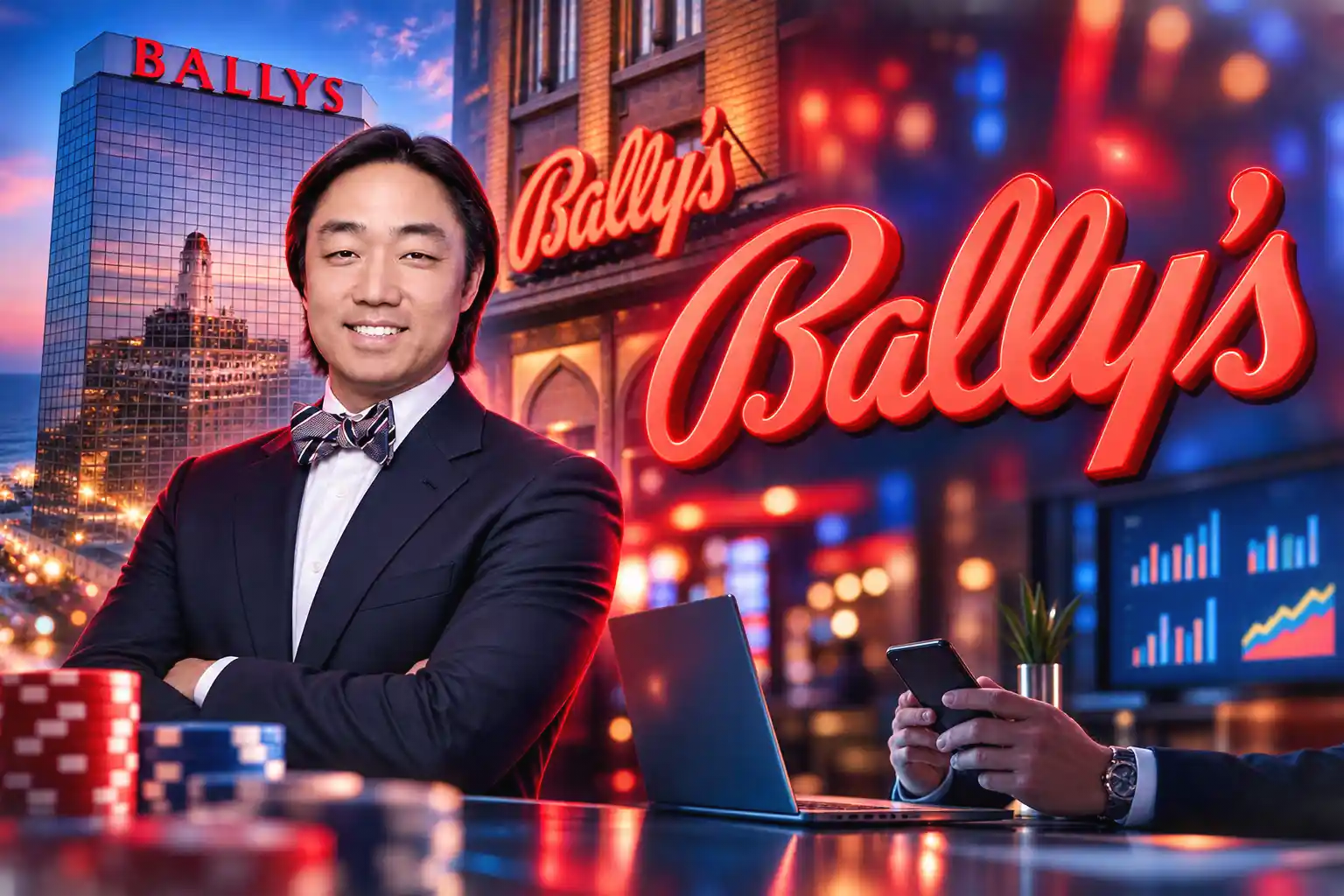
Cash at $18.25, or a Ticket Back Into BALY
The merger was never a forced squeeze into a private file. Each holder could take cash or keep common stock, and Standard General, Sinclair, and Hayden had already pledged to roll.
On closing day the company paid $18.25 on 22.8 million shares. It funded that cash with $500 million of senior notes due 2028 from funds managed by Apollo, plus cash on hand and other available sources. Holders of 17.9 million shares kept their stock. Queen holders took 30.5 million new shares, so 48.4 million shares were outstanding when the dust settled.
HOW THE FLOAT WAS REBUILT
| Bucket | Shares | What holders received | |
|---|---|---|---|
| Cashed out | 22.8 million | $18.25 a share in cash | |
| Rolled over | 17.9 million | Listed Bally’s common stock | |
| Issued to Queen holders | 30.5 million | New Bally’s common stock | |
| Common stock outstanding at close | 48.4 million | NYSE: BALY after February 10, 2025 |
At signing, Bally’s said Sinclair and Hayden had committed to roll with Standard General, so at least 47% of fully diluted equity was already headed into the combined company. By 5 p.m. Eastern on November 19, 2024, elections covered about 17.5 million shares, including 8.85 million held by Standard General and 4.95 million held by other support-agreement parties. A second election window later pushed the rollover total to 17.9 million.
Parent and its affiliates beneficially owned 73.8% of common stock on February 7, 2025. The public stub was real, but it was a minority stub under a hedge fund that already chaired the board.
The Unaffiliated Vote Cleared by a Slim Margin
Headline support looked crushing because affiliated holders voted. The 8-K on the meeting is colder. Approval needed a majority of all 40,666,741 shares outstanding and a majority of the 25,797,257 unaffiliated shares outstanding, so a non-vote counted against the deal.
NOVEMBER 19, 2024 SPECIAL MEETING
| Test | For | Against | Abstain | Share of the required base |
|---|---|---|---|---|
| All outstanding shares | 28,141,876 | 212,373 | 98,608 | 69.2% of 40,666,741 |
| Unaffiliated outstanding shares | 13,280,078 | 212,372 | 96,608 | 51.5% of 25,797,257 |
The unaffiliated stockholder vote totals cleared a majority of that class by about 1.5 points. Shares present or represented totaled 28,452,856, and 98.9% of those voted for the merger, which is the figure that moved in short recaps. The deal’s own test was the harder one, and it was close.
Jaymin Patel, chairman of the special committee, had already framed the cash as immediate value when the board signed in July. The unaffiliated vote was the check on that call, and it passed without a flood of no votes. It passed because a large block of unaffiliated stock never voted at all, and the yes pile still topped 50% of the class.
Four Queen Properties and a $500 Million Note
Queen was the asset Standard General folded in so the “buyout” could be a combination. The July 25, 2024 release put Bally’s at a $4.6 billion enterprise value and said the combined company would stay a public registrant. Queen then ran four casinos in three states.
WHAT QUEEN BROUGHT IN
- DraftKings at Casino Queen: East St. Louis, Illinois, branded with DraftKings under Illinois sports-betting rules.
- Queen Marquette: Marquette, Iowa, then still moving off a riverboat; the landside conversion opened in February 2026.
- Queen Baton Rouge: Baton Rouge, Louisiana, already in a new landside complex opened in August 2023.
- Belle of Baton Rouge: Also Baton Rouge, later rebadged Bally’s Baton Rouge after a landside move in December 2025.
Queen also held a large stake in Intralot, the Greek lottery supplier, which Bally’s later used as the core of a wider Intralot combination. Apollo’s $500 million of notes due 2028 were the cash engine for the 22.8 million shares that wanted out. Without that paper, the hedge fund would have been buying a debt-heavy casino group with a much thinner checkbook.
Robeson Reeves, Bally’s chief executive, said at signing that four Queen properties would sit alongside Bally’s then 15 domestic casinos and add market spread while Chicago and other projects were still being funded. The Chicago permanent resort is still aimed at early 2027.
Why Standard General Paid Less Than Its 2022 Offer
Soo Kim is managing partner of Standard General. He is also chairman of Bally’s. In January 2022 the fund offered $38 a share, a bid the board turned down that May, days after Chicago awarded Bally’s the city’s casino project. The stock then fell for two years as the Chicago build and the company’s debt load weighed on the quote.
The 2024 path started at $15.00 a share in March, then rose to $18.25 on July 25. That cash was a 71% premium to the 30-day volume-weighted average as of March 8, 2024, the last session before the $15.00 idea became public. It was also 52% below the $38 cash Kim had put on the table two years earlier.
The Transaction provides Bally’s stockholders with a significant cash premium along with certainty of value for their investment or, if they elect, to retain their shares, the opportunity to participate in the longer-term growth prospects of our expanded portfolio and significant development pipeline.
Soo Kim, Managing Partner, Standard General, July 25, 2024 company release
Patel said the special committee, with its own bankers and lawyers, found that the cash delivered “a meaningful and immediate value to stockholders.” Macquarie Capital advised that committee. Kim and director Terrence Downey recused themselves from the board’s recommendation because of their ties to Standard General and Queen.
A Miami police pension fund later sued over the 2024 price, calling the offer coercive and arguing that Sinclair and Hayden helped lock in a rollover that Standard General needed in order to close. The complaint is a claim, not a finding. The documented facts are the $38-to-$18.25 drop, the support agreements, and the unaffiliated majority that still had to be won without those allied blocks.
Rollover Shares Trade Below the Cash Price
The listing is the leftover fact every “takeover” headline skipped. Holders who wanted a check got $18.25. Holders who wanted to stay in Kim’s expanded group kept BALY, and that stub has not paid them back to the cash line.
THE STUB AFTER THE MERGER
- Cash they declined: $18.25 a share, the merger price paid on 22.8 million shares.
- September 24, 2026 close: $14.05, 23% below that cash.
- 52-week range: $8.44 to $20.74, so the stock did print above $18.25 in the year after close, then fell through it.
- Control now: A May 2026 proxy put Standard General’s 66.8% stake at 32,480,973 shares of 48,743,136 outstanding on March 23, 2026, with Hayden at 10.2%.
The ownership math moved after close. Parent’s 73.8% on February 7, 2025, is the merger-day figure. The 66.8% in the March 23, 2026 proxy is the later filing, after share-count changes. Both describe Standard General control of a company that still files 10-Qs and still trades.
In the second quarter of 2026, Bally’s reported $792.2 million of revenue, up 20.5% from a year earlier, with casinos and resorts at $401.0 million, up 2.0%, helped by the Baton Rouge and Marquette landside moves and the temporary Chicago casino. That is the business the rollover cohort still owns. It is also the business whose common stock last printed $4.20 a share under the cash Standard General wired to everyone who wanted out.
Frequently Asked Questions
When did the Bally’s and Queen merger actually close?
The mergers became effective on February 7, 2025, when Bally’s filed a certificate of merger in Delaware, Queen survived as a direct wholly owned subsidiary, and Parent and its affiliates beneficially owned 73.8% of Bally’s common stock that day.
How did the unaffiliated vote threshold work?
The merger needed a majority of the 25,797,257 unaffiliated shares outstanding, not a majority of votes cast, so silent holders counted as no; the 13,280,078 yes votes were enough, and Soo Kim and Terrence Downey had already recused from the board recommendation because of their Standard General and Queen ties.
What was the BALY.T ticker and how long did it last?
Rollover shares received a new CUSIP and traded as BALY.T from the November 19, 2024 election deadline through closing, then reverted to BALY on February 10, 2025, after Bally’s opened a second rollover window that ran until 5 p.m. Eastern on January 17, 2025.
How many Queen shares were issued in the combination?
SG Gaming contributed its Queen stock for 26,909,895 Bally’s shares at an exchange ratio of 2.4536890595, and other Queen holders received about 3,542,201 shares, which the company rounded to 30.5 million shares in its closing release.
Can you still buy Bally’s stock on the NYSE?
Yes. Common stock kept trading after close, and warrants to buy up to 11.6 million Bally’s shares also remained outstanding on February 7, 2025, alongside the 48.4 million common shares then outstanding.
The cash election is over. The ticker is BALY. The September 24, 2026 close of $14.05 is what remaining public holders have, against $18.25 that left the building with the 22.8 million shares that took the check.
Disclaimer: This article is news reporting on a completed merger and later trading prices, and it is for information only. It is not investment advice, a solicitation to buy or sell Bally’s or any other security, or a recommendation of the cash election versus the rollover. Readers who are considering a position in Bally’s, Standard General-related vehicles, or other casino stocks should consult a licensed financial adviser who can review their own holdings and risk limits. Share counts, ownership percentages, and market prices reflect the company filings and exchange prints cited above and can change with later reports.

The Seminole Tribe’s $4 Billion Hard Rock Guitar Takes the Strip

Star Entertainment’s $1 Million Loss Leaves Sydney Exposed

Resorts World Turns a Compliance License Into an Arena Bid

William Latta Claims His First RGPS Tunica Ring

Caesars’ Las Vegas Strip Bet Now Runs Through Conventions

Atlantic City’s 2025 Tourism Win Left a Thinner Resort

The Cosmic Upright Became Light & Wonder’s Quiet Floor Engine

Revo’s Manchester Rebuild Outgrew Its First Approval

New Jersey Asked Miss America Home With No Money

Interior Hands Redding Rancheria the I-5 Casino Frontage
-
 CASINO1 year ago
Atlantic City’s 2025 Tourism Win Left a Thinner Resort
-
 NEWS2 years ago
The Cosmic Upright Became Light & Wonder’s Quiet Floor Engine
-
 CASINO2 years ago
Revo’s Manchester Rebuild Outgrew Its First Approval
-
 CASINO2 years ago
Interior Hands Redding Rancheria the I-5 Casino Frontage
-
 CASINO2 years ago
New Jersey Asked Miss America Home With No Money
-

 CASINO2 years ago
Churchill Downs’ $100 Million Owensboro Bet Is Paying
-
 CASINO12 months ago
Carbone Riviera Takes the Bellagio Room Picasso Left
-
 CASINO2 years ago
Harrah’s Ak-Chin Hands the Floor to Its Marketing Chief